States most devastated by dementia as Alzheimer’s mortality surges


Dementia’s health, financial, and personal effects are growing, but the burden varies considerably across the United States.
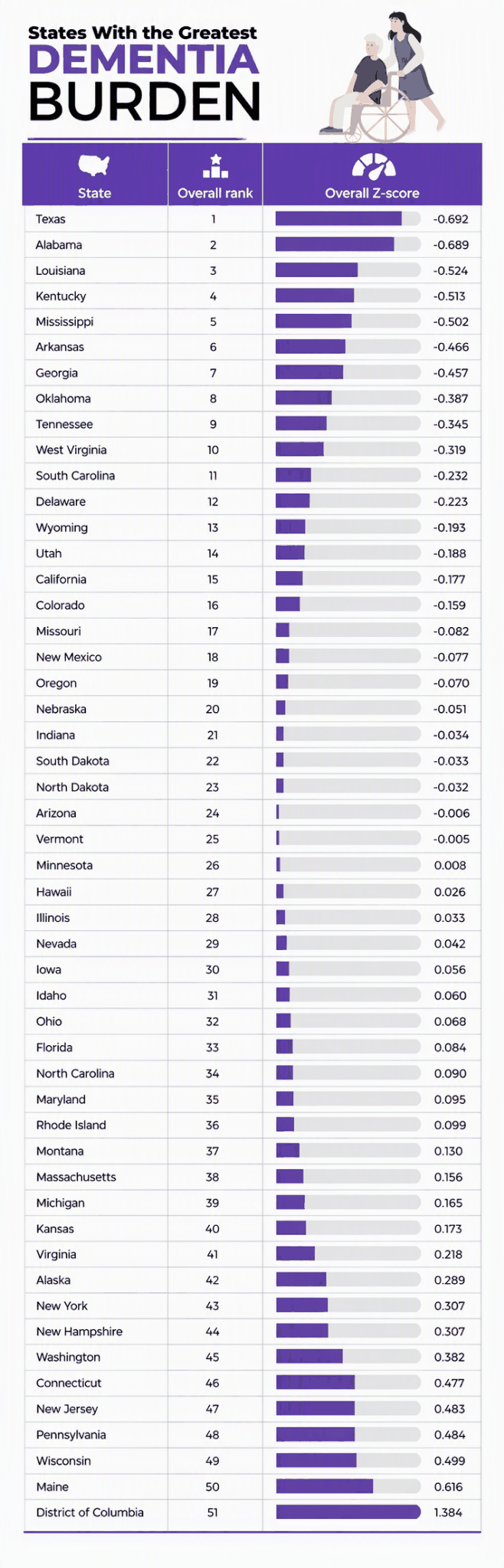
The analysis found that Texas had the highest overall dementia burden score, while several Southern states also ranked near the top.
Family caregivers often face substantial stress, lost sleep, and isolation while supporting someone living with dementia.
If you’re caring for someone living with dementia, you may already know how much this condition can touch everyday life, from the practical details of care to the emotional weight of watching someone you love change.
Dementia is a growing health crisis in America and around the world. More than 55 million people are living with dementia worldwide, and it is the seventh-leading cause of death, according to the World Health Organization (WHO).
Once referred to as “The Silent Epidemic,” dementia affects public health and deeply personal parts of life. If someone you care about is living with dementia, it can be extremely difficult to witness the changes they experience.
Dementia is an umbrella term for conditions involving the deterioration of major brain functions, most notably memory, language, and cognition. Although dementia is most often associated with Alzheimer’s disease, there are several types of dementia that may affect memory and cognition, along with other diseases linked to dementia.
According to the Centers for Disease Control and Prevention, an estimated 6.7 million Americans are living with Alzheimer’s1 and that number is expected to reach 13.8 million by 2060. Alzheimer’s disease is the seventh leading cause of death in America. 2 It also represents between 60% and 80% of dementia diagnoses in the U.S. 3
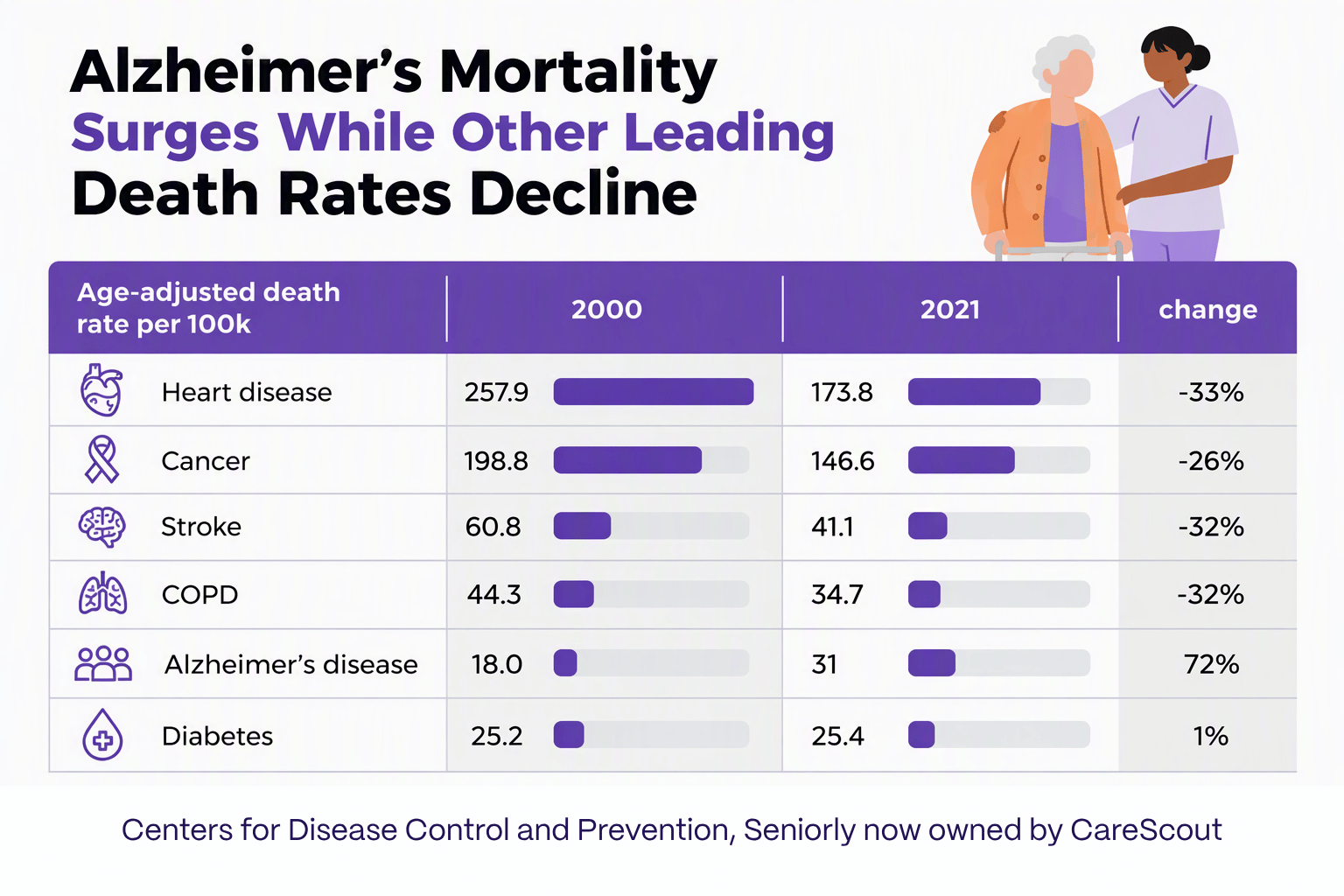
Although the overall number of people with Alzheimer’s is rising, the mortality rate is also a concern. From 2000 to 2021, the Alzheimer’s mortality rate increased by 72%, according to the CDC.4 Meanwhile, mortality rates for other leading causes of death, such as heart disease, cancer, and stroke, though higher overall, have fallen since the turn of the century.5 This increased mortality rate is concerning for two reasons: dementia rates are expected to increase in the coming decades, and effective treatments remain limited for conditions such as Alzheimer’s disease.
Why are Alzheimer’s mortality rates rising?
Despite many studies by federal agencies, much about Alzheimer’s remains unclear. The medical community hasn’t reached a consensus on exactly what is driving the increase in mortality rates, but researchers have proposed several theories.
Comorbidities and an aging population
When several health conditions occur together, they can make care more complex. The National Library of Medicine links comorbidities, such as cerebrovascular disease, diabetes, and hypertension, to increased mortality rates. As America ages,6 the prevalence of these conditions is also expected to increase.
From 2000–2019, life expectancy in America increased by 2.3 years.7 Because advanced age is the single greatest risk factor for dementia, this increase in life expectancy may contribute to higher dementia mortality rates. In other words, an older population that has survived other health risks may be more likely to experience dementia. At the same time, studies of centenarians and supercentenarians, people who are over 100 years old, who show no signs of dementia are exploring genetic and environmental factors that could offset this link between age and dementia.
Changes in death certificate reporting
The increase in Alzheimer’s mortality rates may sound alarming, but some researchers suggest that the way causes of death are reported has changed over time. The National Institutes of Health (NIH) published a review titled Is the Rise in Reported Dementia Mortality Real? The review suggests that changes to reporting on death certificates may be contributing to the increase in Alzheimer’s mortality statistics. 8 If dementia is now listed more often as the official cause of death instead of a comorbidity that contributed to death, such as pneumonia or stroke, that could affect how Alzheimer’s mortality rates appear.
Lifestyle factors
America ranks No. 40 worldwide for life expectancy and is one of the most obese countries in the world. The CDC has indicated that lifestyle factors, including overeating, smoking, and excessive alcohol consumption, may contribute to dementia. Findings from a cohort study of immigrant populations also indicate that diet may play a role in dementia risk.9 For example, some immigrant populations have higher dementia rates than people living in their respective home countries. One key variable identified in these studies is the American diet, which is rich in fat and cholesterol but low in greens, nuts, and healthy oils.
Another consideration is America’s poor work-life balance compared with other countries. This focus on work and productivity correlates with America being cited as one of the “most stressed" 10 countries worldwide. Although no study has examined stress and dementia at the population level, there is some evidence linking high stress to an increased risk of dementia.
All these factors may play a role. Meanwhile, the U.S. is spending billions of dollars in search of a cure, and promising treatments are being studied that could slow the progression of Alzheimer’s disease and other dementias.11 A new $300 million research database will track Americans’ brain health over time, which should help researchers study a condition that affects cognitive function and memory. Work also continues to improve the accuracy and sensitivity of dementia biomarkers that appear before behavioral symptoms, such as memory loss.
The impact on family caregivers
In 2023, medical and long-term care costs for people with dementia were expected to reach $345 billion, while the estimated value of unpaid caregiving was nearly $340 billion.12 These figures show the considerable financial burden of dementia care, but families may also experience a deeply personal toll.
Caring for a family member with dementia can significantly affect a family caregiver’s physical, emotional, and social health. Family caregivers supporting people with dementia are more likely to experience depression, anxiety, and poor quality of life than those caring for people with other conditions.13 According to the National Library of Medicine, 58% of family caregivers report extreme stress, 47% report less sleep, and 43% feel isolated.
Dementia’s impact across America
Dementia’s burden isn’t evenly distributed across the U.S. Some states are affected more than others because of differences in demographics and risk factors, including age, race, gender, education level, access to health care, and access to social services.15
To identify the states with the greatest burden, this analysis examined six dementia-related metrics from the CDC and Alzheimer’s Association across all 50 states and Washington, D.C. It developed a “burden score” representing the data’s combined impact. The metrics include mortality rates, cognitive decline, daily support needs, doctor’s visits, cost burden, and expected population growth. A full explanation of the scoring and methodology appears at the end of the study.
Key findings
The toll dementia takes on a state isn’t directly linked to the size of its older population. The findings indicate a geographic influence, with states in the Southeast experiencing a greater overall dementia burden.
Mississippi, Alabama, Washington, Georgia, and Arkansas have the country’s highest Alzheimer’s mortality rates, a key driver of the overall dementia burden score.
Regions with lower overall dementia burden scores tend to have lower Alzheimer’s death rates and fewer older adults experiencing cognitive decline. However, Medicaid costs for people with dementia weren’t closely related to a state’s overall score.
States hit hardest by dementia
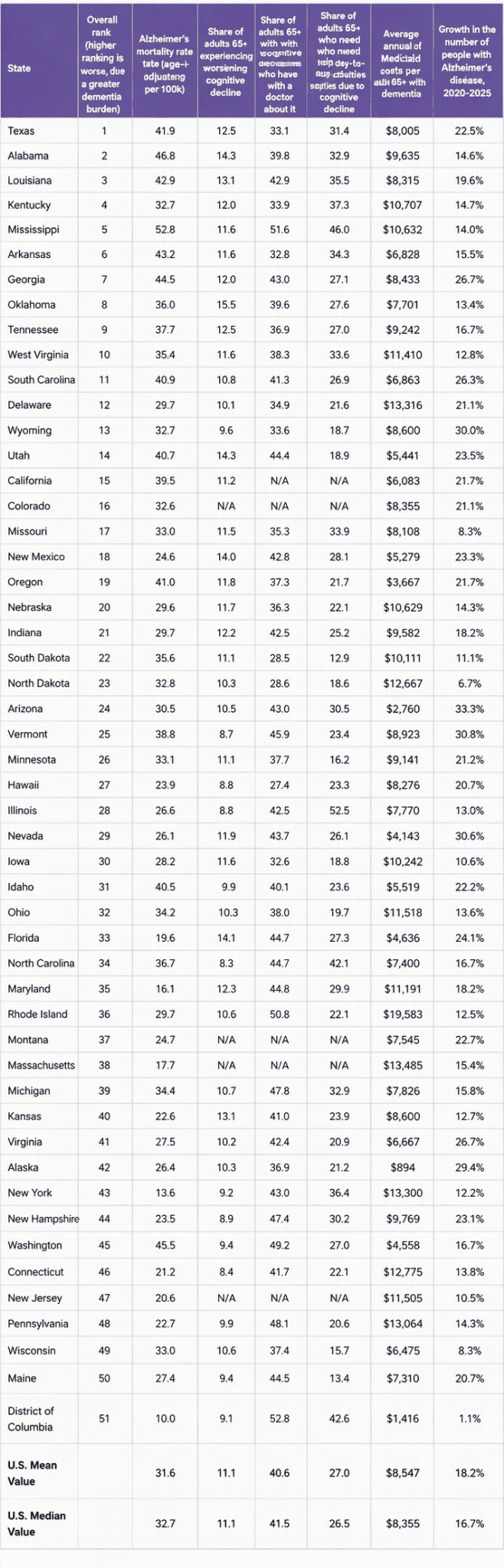
According to the analysis, Texas has the greatest dementia burden score in the U.S. Several key metrics contributed to its overall score. The state had 41.9 deaths from Alzheimer’s per 100,000 people in 2021, and the number of people with dementia was expected to rise 22.5% between 2020 and 2025. This is despite Texas having one of the youngest populations in the U.S., with just 13.2% of residents age 65 or older. The higher mortality rate is likely due to a combination of factors, including an overall less healthy population, the number of medically underserved regions, and limited public spending to support people with dementia and their families. 16
Other Southern states, including Alabama, Louisiana, Kentucky, and Mississippi, round out the five states with the greatest dementia-related burden. Mississippi has the highest Alzheimer’s death rate in the U.S., at 52.8 per 100,000 people. In Kentucky, just 1 in 3 older adults experiencing cognitive decline have talked to a doctor about it.
At the other end of the spectrum, Washington, D.C., has the smallest dementia burden because of slower growth in the number of residents with dementia and lower Medicaid costs per person. Other areas with lower overall dementia burdens include Maine, Wisconsin, Pennsylvania, New Jersey, and Connecticut. However, directly comparing the nation’s capital with states can be difficult.
Notable outliers
A few states stood out from the broader findings. Washington scored well on most metrics, with a lower rate of cognitive decline, a higher share of older adults experiencing difficulties who saw a doctor, and an average Medicaid cost burden of $4,558. However, it had the country’s third-highest Alzheimer’s mortality rate, at 45.5 deaths per 100,000 people. That disconnect may be due to Washington’s relatively young population, given that just 16.2% of residents are age 65 or older. The state has also prioritized people needing care, announcing in 2022 that it would invest $47 million in community-based behavioral health treatment, including specialized dementia care.17
New York has a lower overall dementia burden because of its low Alzheimer’s mortality rate. However, the data indicates that the state’s older adults still need considerable care. Among older adults experiencing cognitive decline, 36.4% need help with daily activities, a higher rate than in nearly every other state.
In Wyoming, where the population with dementia was expected to grow by 30% from 2020 to 2025, just 18.7% of older adults experiencing cognitive decline said they needed help with daily activities. That is far below the 50-state average of 27%.
Rhode Island ranked near the middle overall but had the country’s highest cost burden: an average of $19,583 in annual Medicaid costs per person with dementia. The analysis examined Medicaid rather than Medicare spending because the programs cover different services for people with dementia. 18 Although Medicare spending is typically higher overall, Medicaid covers care in residential communities and in-home services for older adults who might otherwise be unable to remain at home. About 1 in 4 people with dementia who live in the community are covered by Medicaid.19
State-level data for each category
The big picture
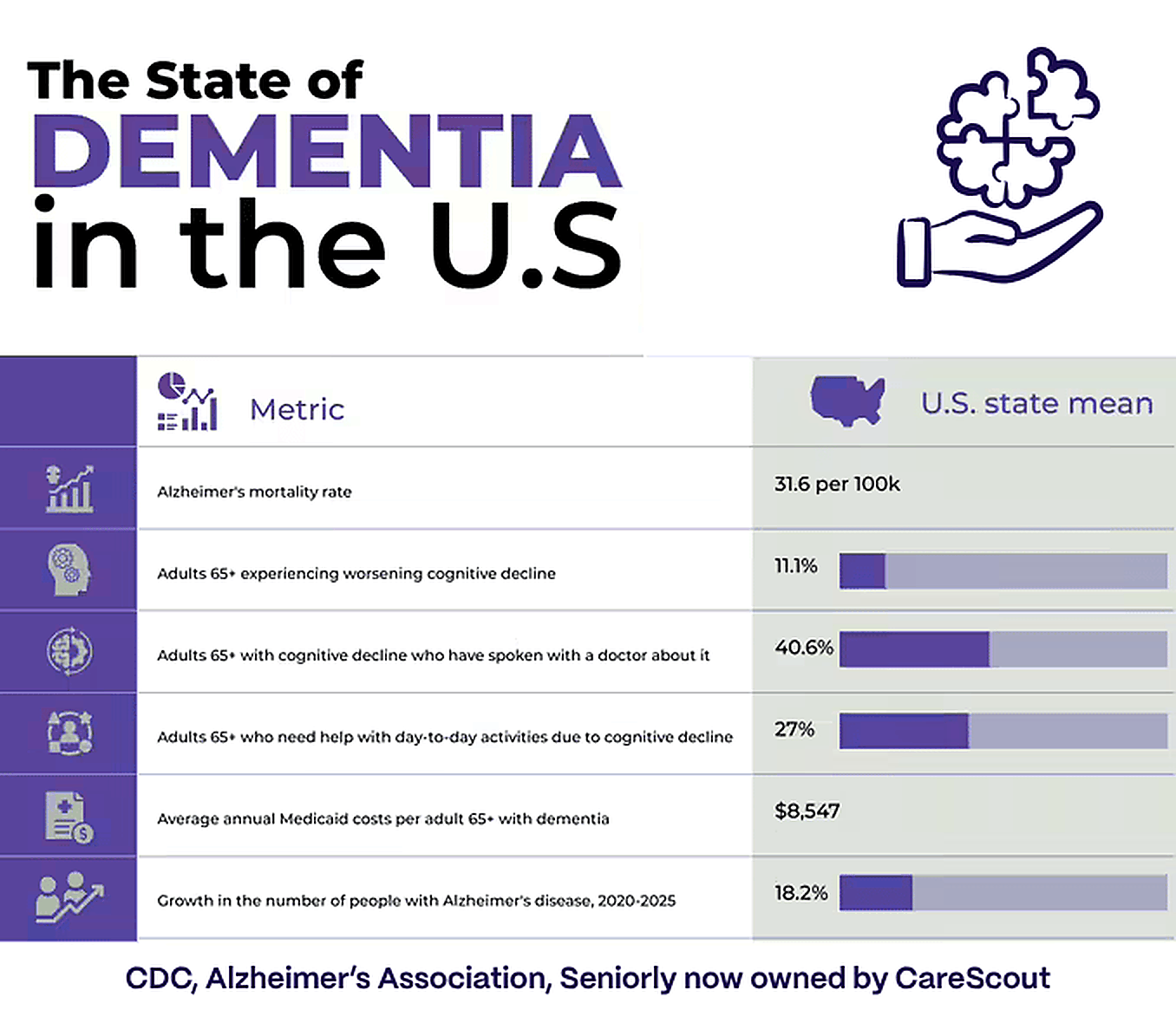
Although some states are more affected than others, dementia is becoming a more significant issue across the U.S. The number of people with dementia was projected to rise by 18% between 2020 and 2025, and medical bills can reach thousands of dollars.
Roughly 1 in 10 older adults is experiencing cognitive decline, and 27% of them need help with day-to-day activities. Family members take on a major caregiving role, but professional care settings also offer needed support. Among older adults in residential care communities, 42% have dementia, as do 25% of those in adult day care centers.
Healthy aging tips
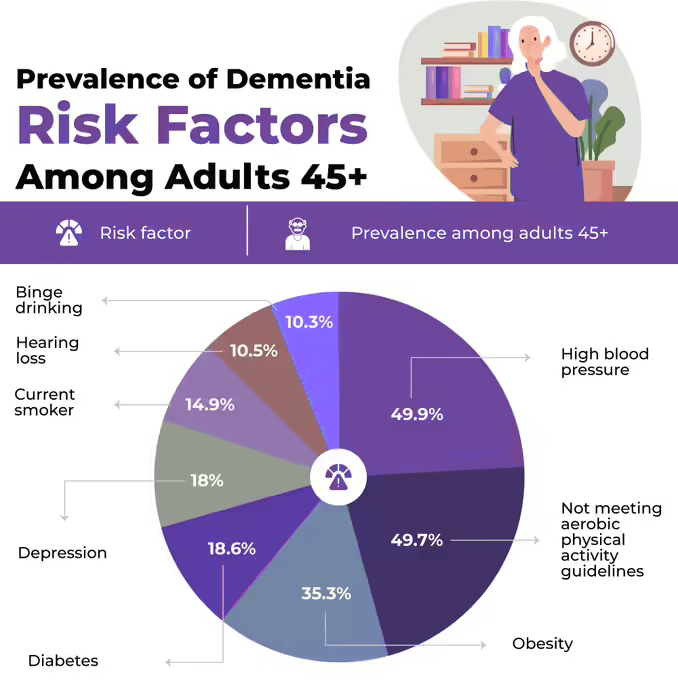
Dementia results from a combination of factors, including age, genetics, and family history, but lifestyle risk factors may also play a role.20 Dementia is linked to common chronic conditions, such as high blood pressure, diabetes, and depression, as well as hearing loss, smoking, and binge drinking.
Dementia isn’t currently considered preventable. However, you can take steps to support healthy aging and brain health that may reduce your risk later in life.
Exercise regularly. Data links 30 minutes of daily exercise with both overall health and brain health. As you get older, consider varying your exercise habits and exercising with friends to increase the benefits and enjoyment.
Eat responsibly. Eating more foods rich in omega-3 fatty acids, such as salmon, and fewer foods high in fat and cholesterol, such as red meat, is linked with improved heart and brain health. Regulating food consumption may also reduce your risk of cardiovascular problems, obesity, and diabetes, which are associated with an increased risk of dementia.
Exercise your brain. Emerging research suggests that challenging your brain with new experiences each day can increase your resistance to dementia onset. Examples include learning a new language, playing a musical instrument, or solving crosswords and sudoku.
Maintain your relationships. Research indicates a correlation between social connection and later dementia onset. Spend time with family and friends when you can. Structured senior living environments can also provide opportunities to engage, socialize, and form new relationships with other residents.
Sleep well. Research indicates an inverse relationship between quality sleep and dementia onset. One possible reason is that the brain has “janitor” cells that work only during sleep and clear some of the toxic byproducts associated with dementia onset. Aim for good-quality sleep by minimizing noise and disturbances and addressing potential sleep apnea. Sleep needs differ, but 6–8 hours is a reasonable estimate. If you have trouble sleeping, consider seeing a sleep specialist who can identify any medical or behavioral reasons for limited sleep.
Moderate your drinking. Unhealthy drinking habits may increase your risk of dementia. On the other hand, moderate drinking, defined here as one drink per night for women and two drinks per day for men, may be associated with lower dementia risk. If you drink, do so responsibly.
Reduce your risk of brain injuries. Older adults have an increased risk of injuries from falls, including bone and brain injuries. Brain injuries are associated with an increased risk of dementia, so it’s important to reduce fall risk. If you’re losing your balance more often, speak with a physiatrist, neurologist, or physiotherapist to identify and address possible causes.
Don’t smoke. Smoking increases your risk of several health problems and may directly or indirectly increase your risk of dementia.
Conclusion
Dementia’s burden in the U.S. is substantial and growing. Future treatments may make progress against dementia-related diseases, but for now, their economic, social, and emotional effects continue to shape daily life for millions of families. Understanding where the burden is greatest can help families consider how to address a loved one’s medical, social, and emotional needs.
Methodology
The analysis used the most recent data available from the Centers for Disease Control and Prevention and the Alzheimer’s Association to determine which states face the greatest dementia burden. A Z-score distribution scaled each of six metrics relative to the average across all 50 states and Washington, D.C., with outliers capped at 3. Some Z-scores were multiplied by -1 because a higher score was negatively associated with being above the national average. Each state’s overall ranking was calculated using its average Z-score across the six metrics. The metrics were:
Mortality rate: Alzheimer’s disease mortality rate, 2021 (CDC)
Cognitive decline: Share of adults age 65 or older experiencing worsening cognitive decline or memory loss, 2020/2019 (CDC)
Daily support: Share of adults age 65 or older who need help with day-to-day activities because of cognitive decline, 2020/2019 (CDC)
Doctor’s visit: Share of adults age 65 or older with cognitive decline who have spoken with a doctor or other health care provider about it, 2020/2019 (CDC)
Population growth: Percentage increase in the number of people with Alzheimer’s disease, 2020–2025 (Alzheimer’s Association)
Cost burden: Average annual Medicaid costs per adult age 65 or older with Alzheimer’s or another form of dementia, 2020, estimated per-capita rate using state prevalence figures (Alzheimer’s Association).
Learn about the CareScout Cost of Care tool
The CareScout Cost of Care Tool is an online platform that provides localized, state-by-state cost estimates and future financial projections for long-term care options, including home health aides, assisted living, and nursing homes.
Expert reviewed by


Nipun Chopra, PhD
Nipun Chopra reviews medical and aging content. With a PhD in Medical Neuroscience from Indiana University School of Medicine, Dr. Chopra's research was centered on the role of key proteins in the progression of Alzheimer's disease.
Written by

Marlena del Hierro
Marlena del Hierro is a strategic senior care industry leader with over a decade of experience. As Director of Operational Growth at CareScout, she drives growth and forges strategic partnerships, leveraging her MA in Gerontology from San Francisco State University. Pr...