

States hardest hit by long-term care staffing shortage


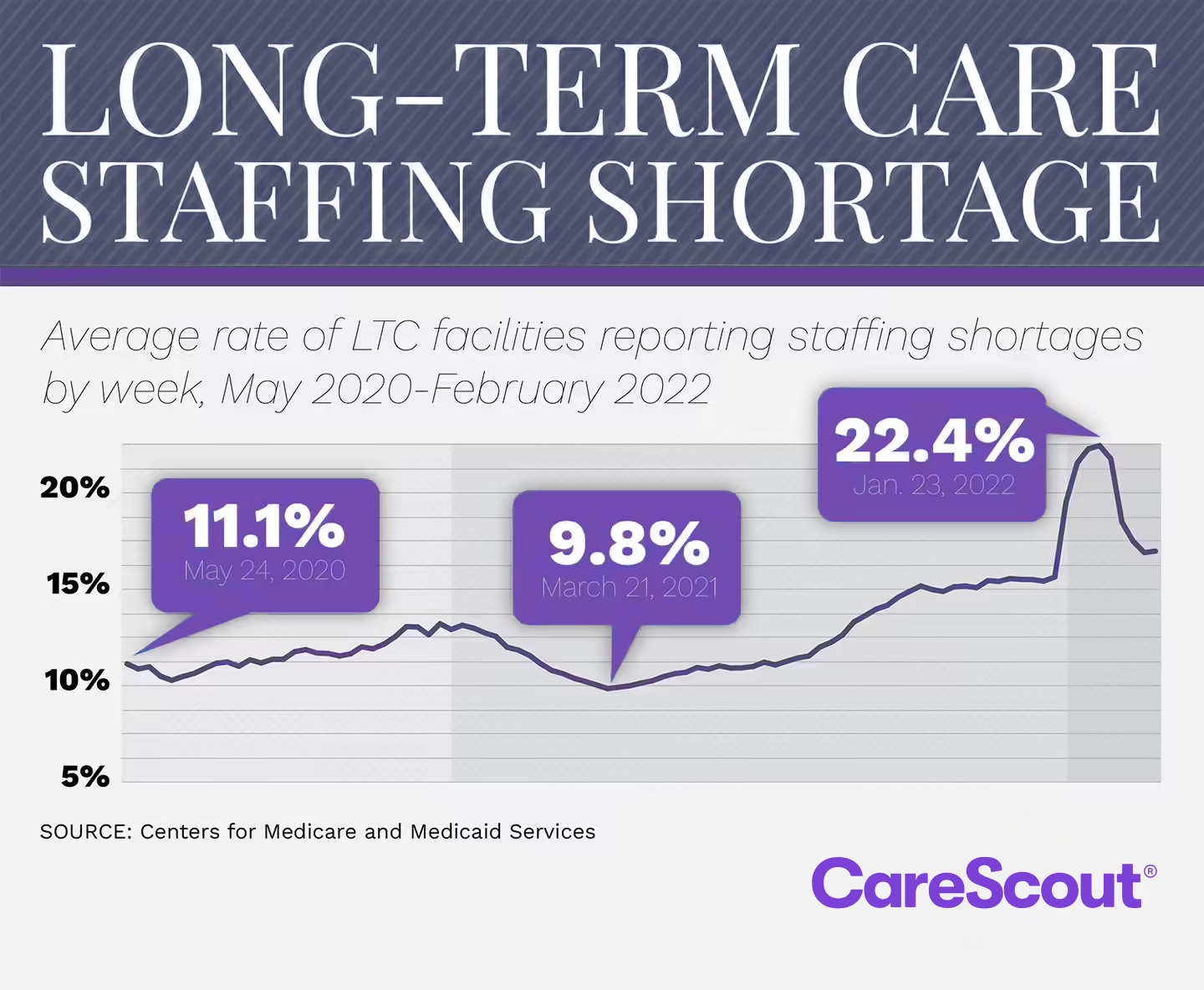
Long-term care staffing shortages increased significantly between May 2020 and January 2022 before easing slightly in February 2022.
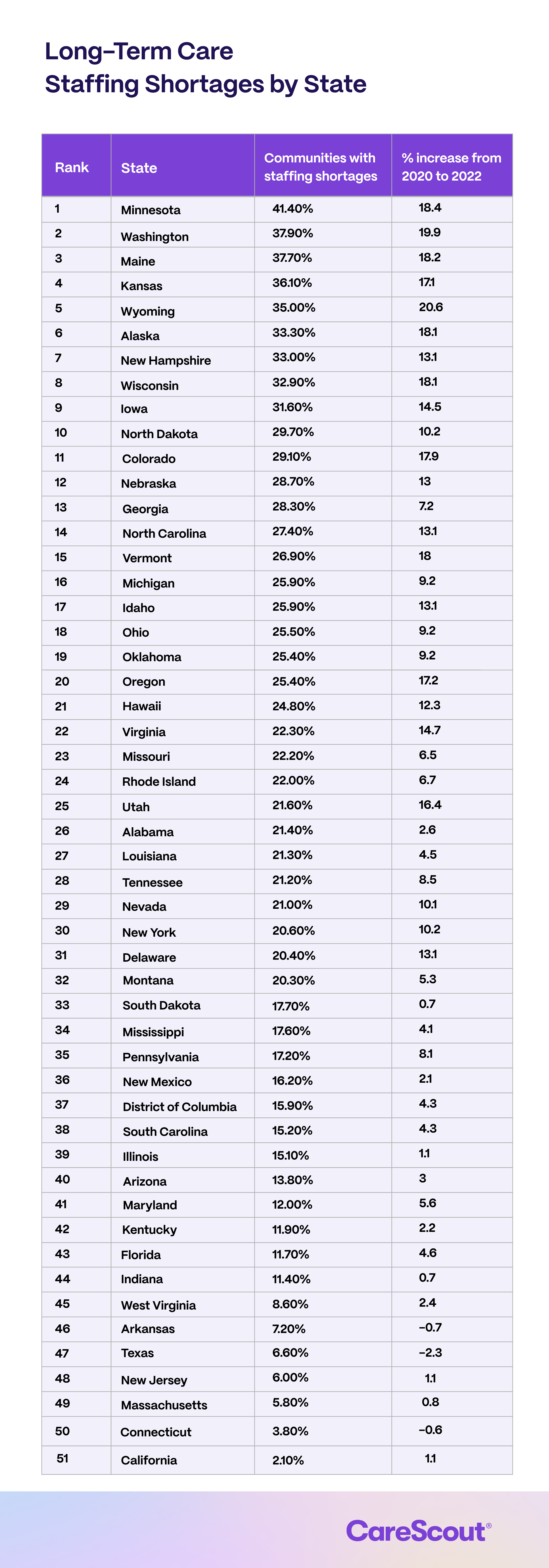
Minnesota reported the highest average shortage rate in 2022, while California had one of the lowest rates.
When comparing long-term care communities, review recent feedback, tour at different times, and ask direct questions about staffing and turnover.
Many industries faced staffing shortages as the economy grappled with the Great Resignation, but few were affected as deeply as long-term care (LTC) providers, including nursing homes and assisted living communities.
Residents and staff at long-term care communities accounted for 23% of COVID-19 deaths through January 2022.1 The resulting staffing shortage added to already difficult working conditions and contributed to a record number of workers quitting their jobs. As baby boomers continue to age, this has created an enormous gap for older adults and their families who need access to quality long-term care.
The average person turning 65 today has a nearly 70% chance of needing some type of long-term care to meet health or personal care needs as they age.2 Although this care is more often provided at home than in formal care settings such as nursing homes or assisted living communities, residential long-term care providers continue to play an enormous role in our society.
An American Health Care Association survey from fall 2021 found that 86% of nursing homes and 77% of assisted living communities said their staffing situation had worsened during the previous three months.3 Only 1% of these organizations said the situation had improved.
To better understand the nature of staffing shortages at long-term care communities nationwide, we took a deeper look at data published by the Centers for Medicare and Medicaid Services. The data tracked staffing shortages amid the ongoing COVID-19 pandemic and continued ups and downs in the job market.
Key findings:
• Only 11% of communities reported a staffing shortage in May 2020, during the first week of data collection. That figure rose to about 22% by January 2022.
• An average of about one-quarter of long-term care communities reported nursing staff shortages in 2022, up from 16% in 2020.
• About 41% of communities in Minnesota reported staffing shortages in 2022, the highest rate in the country.
Staffing shortages surged over two years
Before the situation began to ease slightly in February, a growing share of long-term care communities had been reporting staffing shortages. For the week ending February 27, 2022, the most recent data available for this analysis, an average of 17% of communities reporting to the federal government said they lacked nursing, clinical, aide, or other staff. That was a substantial increase from the week ending May 24, 2020, the first week for which the government collected and reported this data, when the figure was just 11.1%.
That increase was substantial, to be sure, but the rate had previously been even higher. It peaked at more than 22% for the week ending January 16, 2022. Although the situation had improved by late February, there was no certainty that conditions would continue getting better.
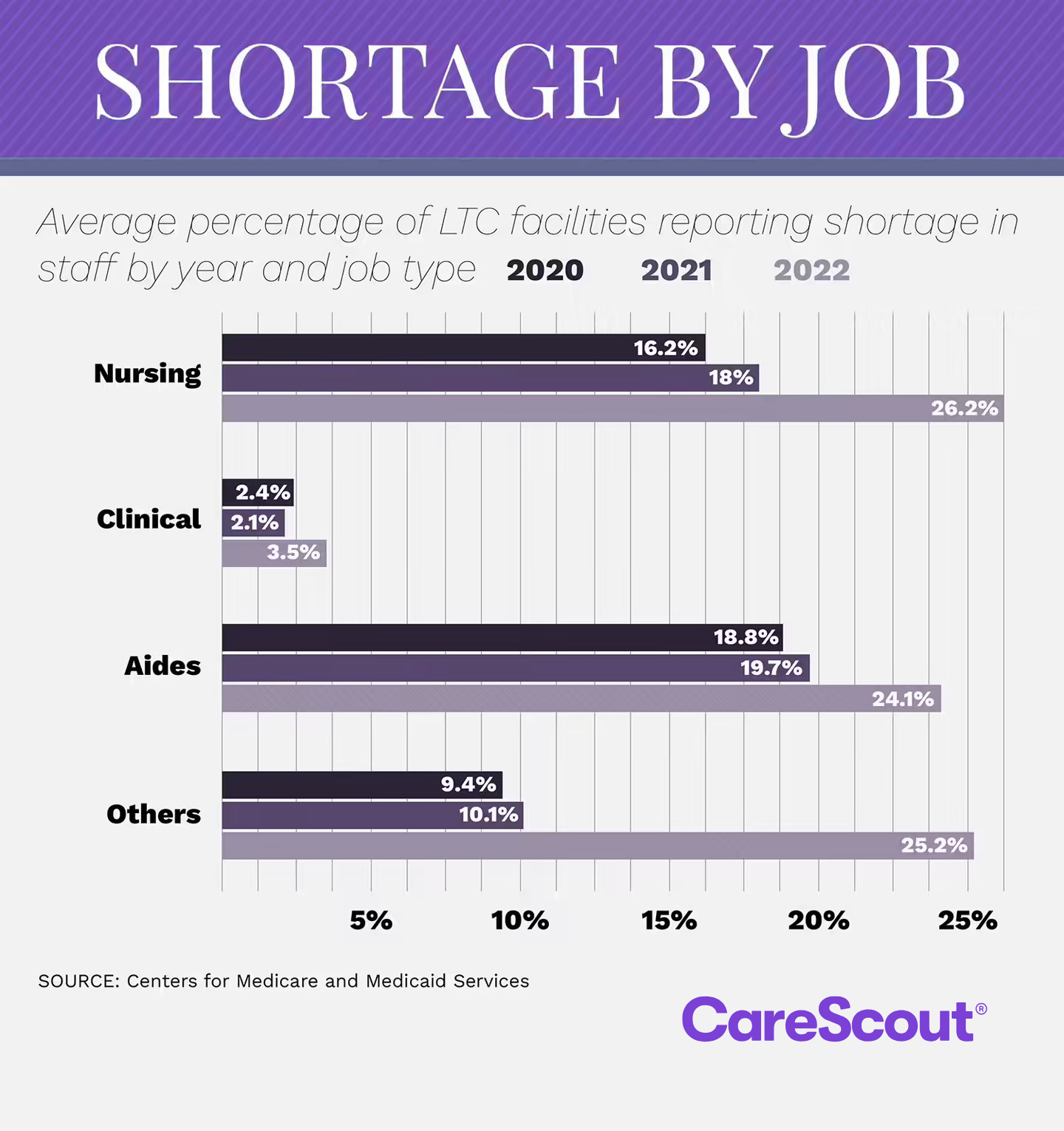
The largest shortages consistently involved nursing professionals, including registered nurses, licensed practical nurses, and vocational nurses, as well as aides, including certified nursing assistants, nurse aides, medication aides, and medication technicians.
Since 2020, an average of about 20% of all long-term care communities reported shortages among these types of workers. Of the three years studied, 2022 was the worst, with one in four long-term care communities reporting shortages of nursing professionals or aides.
Shortages were less common among clinical staff, a category that includes physicians, physician assistants, and advanced practice nurses. It's notable that these positions are also among those most likely to be well paid. According to data from the U.S. Bureau of Labor Statistics, the average U.S. physician earned $208,000 per year, while physician assistants earned an average of $115,000 and nurse practitioners, one type of advanced practice nurse, earned about $112,000.4 In comparison, registered nurses earned about $68,000 in nursing and residential care communities, while nursing assistants earned an average of $30,000.
Still, an average of 3.5% of long-term care communities reported shortages among these types of workers in 2022. That was an increase of almost 1 percentage point since 2020, suggesting that even long-term care workers who tend to be highly paid were becoming harder to find.
Other staff and personnel not included in the previous categories, including environmental services employees, also became more scarce. In fact, the share of communities reporting shortages among these workers nearly quadrupled since 2020.
Minnesota, Washington, and Maine had the worst shortages in 2022
Most states experienced periods of serious staffing shortages at long-term care communities, both overall and within specific types of jobs. The early 2022 data showed that finding qualified workers at nursing homes and assisted living communities remained difficult in many places across the country.
Across the four job categories, an average of 41% of long-term care communities in Minnesota experienced staffing shortages in 2022. Washington and Maine followed close behind at about 38% each.
Not every state faced the same situation. California, for example, fared well when it came to staffing long-term care roles. So far in 2022, only about 2% of communities in the state reported running low on qualified employees.
Although staffing conditions worsened in most states, a few moved in a more positive direction instead. Based on average annual shortages across all four job categories, fewer communities reported shortages in 2022 than in 2020 in Texas, Arkansas, and Connecticut. However, improvements in all three states were modest.
Long-term care staffing shortages by state
Average share of long-term care communities reporting staffing shortages in 2022 and percentage-point change from the 2020 average
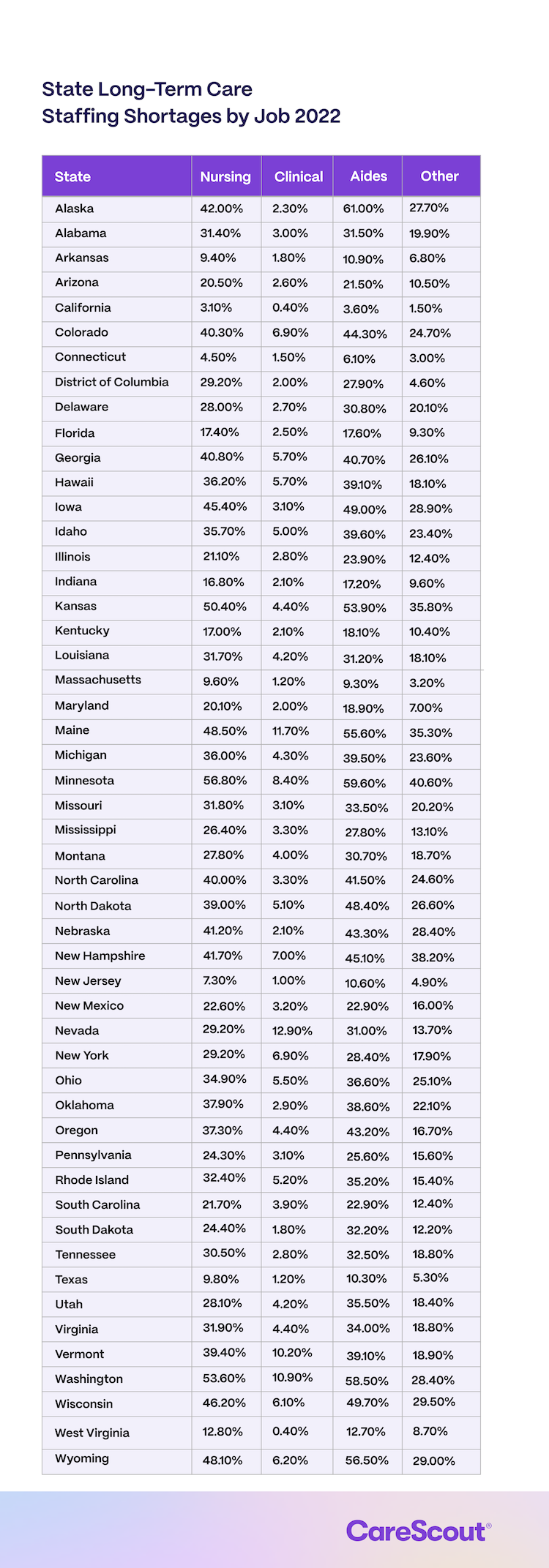
Although shortage rates for the four job categories generally followed national trends, there were some notable outliers in both directions. Nationwide, only about 3% of long-term care communities reported a clinical staff shortage in 2022. This category included physicians, physician assistants, and advanced practice nurses. In Maine, however, the rate was almost 12%. In Alaska, 61% of communities reported a shortage of aides so far in 2022.
In contrast, although nursing shortages were the most common nationally, only 3% of California communities reported a shortage of nurses, and less than 1% reported a clinical staff shortage. Other states consistently remained below national rates across all four job categories, including Texas, New Jersey, Massachusetts, Connecticut, and Arkansas.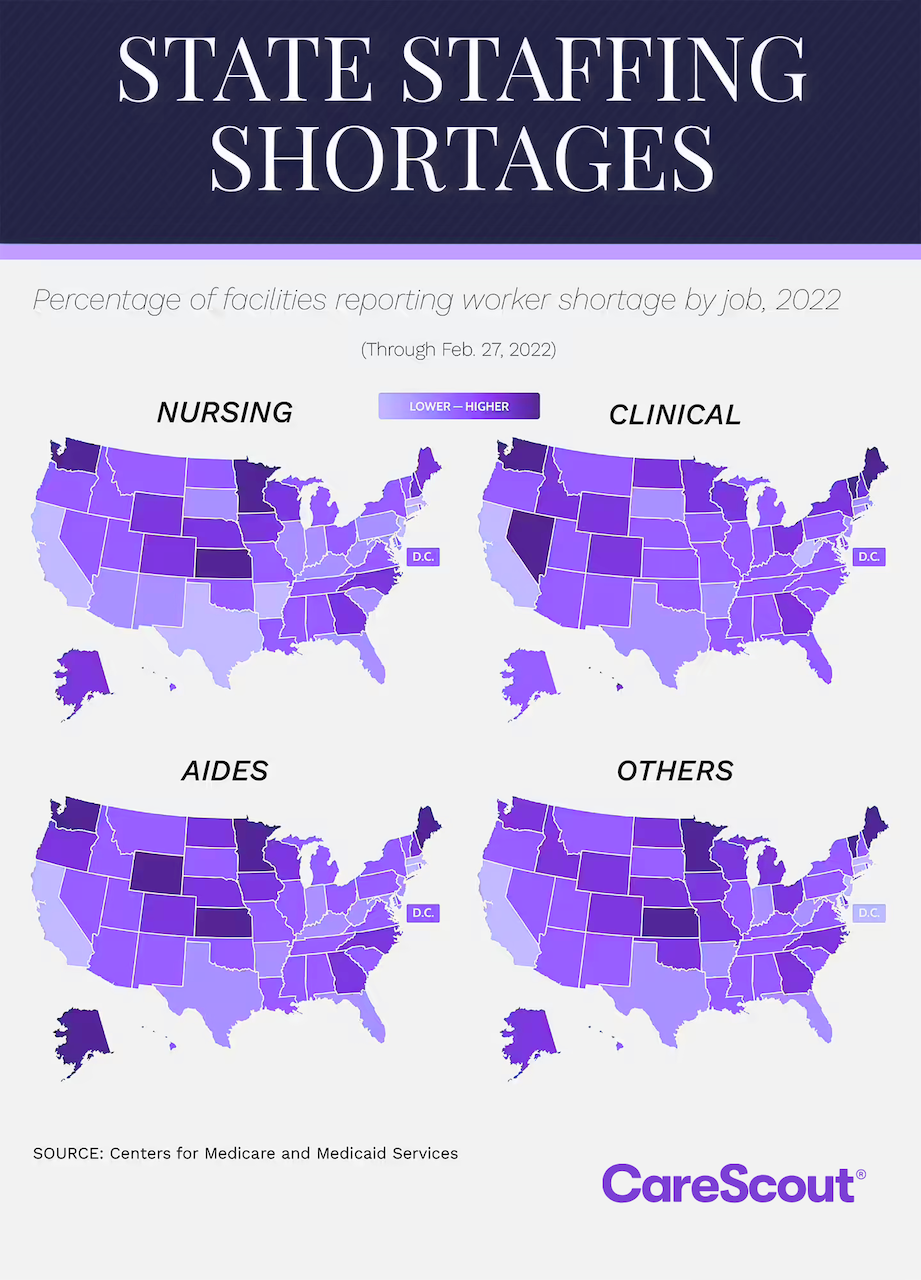
State long-term care staffing shortages by job, 2022
Percentage of communities reporting worker shortages by job*
* Through February 27, 2022
Tips for finding safe, reliable long-term care
1. Read recent community reviews: Many highly rated communities were hit hard by the Great Resignation. Even when a community has strong overall ratings, it's important to read its recent reviews to see whether negative feedback has increased over time.
2. Take tours and talk with residents: Once you've narrowed your options, take multiple tours at different times of day. Try to attend a meal or activity, and talk with several current residents to hear a range of perspectives and opinions.
3. Create a checklist of questions: You can and should expect the director of any long-term care community to answer questions such as:
• What is the ratio of staff to residents, and has it declined since 2020?
• How does your community support its staff?
• What is the staff turnover rate?
• What types of training do staff members receive?
• Do you perform background checks on staff members?
• Is staff available to provide assistance 24 hours a day?
• Is a registered nurse, licensed vocational nurse, or certified nursing assistant on staff? If so, how often?
• Is staff available 24 hours a day to help with activities of daily living (ADLs), such as dressing, eating, bathing, and toileting?
4. Consult local physicians and health care professionals: Before choosing a community, consult your loved one's physician or care manager. They may understand local conditions, have insight into nearby care options, and help guide you toward the best possible decision.
Conclusion
Choosing a long-term care community for a parent or another loved one can bring difficult questions and understandable anxiety for your family. In many parts of the country, staffing shortages made it harder to evaluate care options and find a good fit.
This historical analysis found that the situation may have been easing nationally by February 2022 and had already improved modestly in some states. As you compare communities, focus on recent information, ask direct questions about staffing and turnover, visit at different times, and take time to hear from several current residents.︎
Planning for costs with the Cost of Care tool
Planning ahead can make future care decisions easier. Explore care costs and resources designed to help you prepare.
Written by


Stephen Anderson
Stephen has been a digital marketing, sales, and operations leader. A strategist at heart, he has built high performing solutions for brands large and small across challenging industries such as Insurance, Travel, and Personal Finance. Originally from the north east, S...