8 fun intergenerational activities


Intergenerational activities can help children and older adults build meaningful emotional connections.
Simple activities such as cooking, reading, gardening, and playing games offer opportunities to learn from one another.
Choose an activity that both generations enjoy, and focus on spending relaxed, meaningful time together.
There’s something special about the way children light up a room, especially when they spend time with an older adult. These moments often bring out the best in both generations and create energy that feels meaningful to everyone involved.
Children can benefit from intergenerational activities, too. Some have shown improved test scores and academic achievement while being mentored by an older friend or loved one. For children who don’t have grandparents in their lives, an older adult may offer a special kind of unconditional love, acceptance, and attention.
Older adults can accept children without judgment, while children can help them feel connected to the wider world around them. That emotional bond can be invaluable for both generations.
An aging generation
As more Americans age, opportunities for intergenerational activities may become even more important. According to the U.S. Administration on Aging, by 2030, one in five Americans will be age 65 or older.1
Some people worry about what this shift will mean for health care and retirement costs, but there’s an upside, too. Emotionally enriching interactions between children and older adults can support mutual learning, understanding, and connection. Each generation has something valuable to share with the other.
Connections help children, too
Research has also explored how children perceive older adults. According to a Kansas State University study, children may develop stereotypes and misconceptions about older generations without meaningful interaction2. In general, the American children studied expressed negative feelings about older adults and aging.
However, the study also found that children’s perceptions changed over time through intergenerational programs.
Helping children spend time with older adults throughout their lives can be meaningful, whether that person is a relative, a friend, or someone they meet through an assisted living community near you. If you don’t have an older relative nearby, consider arranging regular visits with an older friend or a senior living community. These shared experiences can help a child build important connections that may stay with them throughout life.
Activities to enjoy together
If you’re ready to build a stronger connection, start by spending time together. You don’t need an elaborate plan to make that time meaningful. Here are some simple intergenerational activities that children and older adults can enjoy together:
1. Arts and crafts
Arts and crafts can bring out the kid in all of us. Creating something together is an easy and enjoyable indoor activity, and the finished project can become a keepsake that reminds you both of your special time together.
2. Nature walks
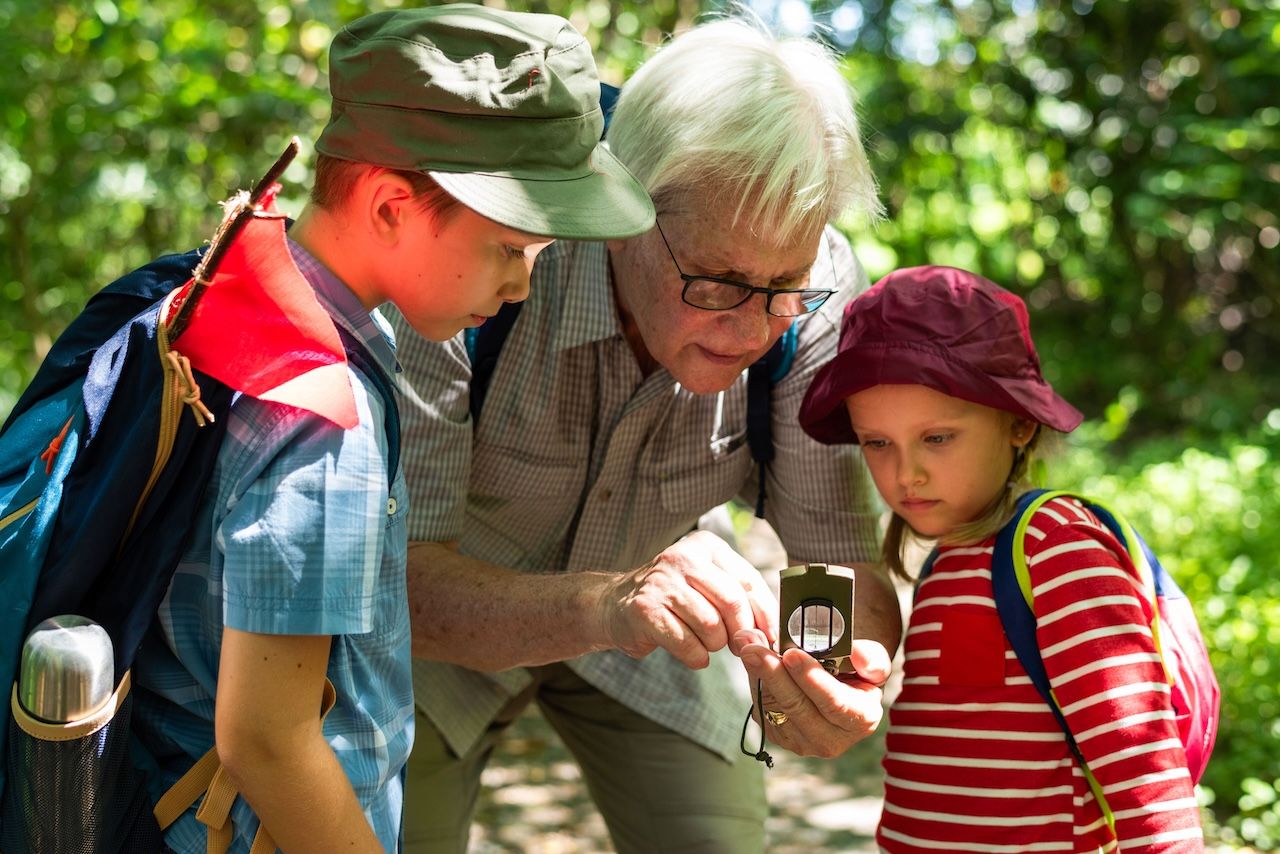
Enjoy some fresh air together at a park or on a walk around the neighborhood. Children often enjoy looking at birds and trees and asking questions about what they see in their surroundings. You could also plan a scavenger hunt or collect colorful leaves to use in a craft when you get home.
3. Baking and cooking
Children often love helping in the kitchen, and baking or cooking together gives you a chance to share a favorite recipe or a family cooking secret. You can teach them about measurements and math, while even the youngest children can help stir the batter. Along with something delicious to eat, you’ll make meaningful memories together.
4. Puzzles and games
Working on a puzzle or playing a board game can support memory and cognitive development for children and older adults. Introduce a child to a classic board or card game you enjoyed when you were young, or let them bring one of their favorite games and teach you how to play.
5. Reading together
Reading together can help a child develop a love of books at a young age. Whether you choose a new children’s book or a well-loved classic, you’ll introduce them to the importance of reading and share a whole new world of adventure. If they’re old enough, invite them to read the story aloud to you.
6. Gardening
If you have a green thumb, invite a child to join you in the garden. Gardening is an outdoor activity you can share while teaching the next generation where food comes from and why ecosystems matter. Children may enjoy digging in the dirt, using the watering can, and even tasting vegetables fresh from the garden as an added bonus.
7. Tablet or smartphone play
Even if you’re comfortable using a smartphone or tablet, children may have something to teach you about the latest apps. Let them show you a few things as you play and explore together. Teaching someone a new skill can build a child’s satisfaction and self-confidence, while learning something new can help keep your mind active at any age.
8. Lunch date
Plan a lunch date at a favorite restaurant, followed by an ice cream sundae for dessert. If you live in a senior living community, invite the child to join you there for a special meal together. Many communities offer a variety of menu options, and ice cream is often a favorite.
These are just a few intergenerational activities you can try. Whether you’re an older adult hoping to connect with children in your community or a parent helping your children build respect and appreciation for older adults, spending time together can create a meaningful and lasting bond. Choose one simple activity you’ll both enjoy, set aside some time, and start there.
Planning for costs with the Cost of Care tool
Planning ahead can make future care decisions easier. Explore care costs and resources designed to help you prepare.
Written by


Brian Dowd
Brian is writer based in New England. He is a passionate storyteller with a knack for finding the extraordinary in the ordinary. He joined CareScout as a Senior Content Writer in 2024. Before that, he worked as a content writer in the senior living industry and worked for several years as an assi...