

Caregivers, nurses, and CNAs: what’s the difference?


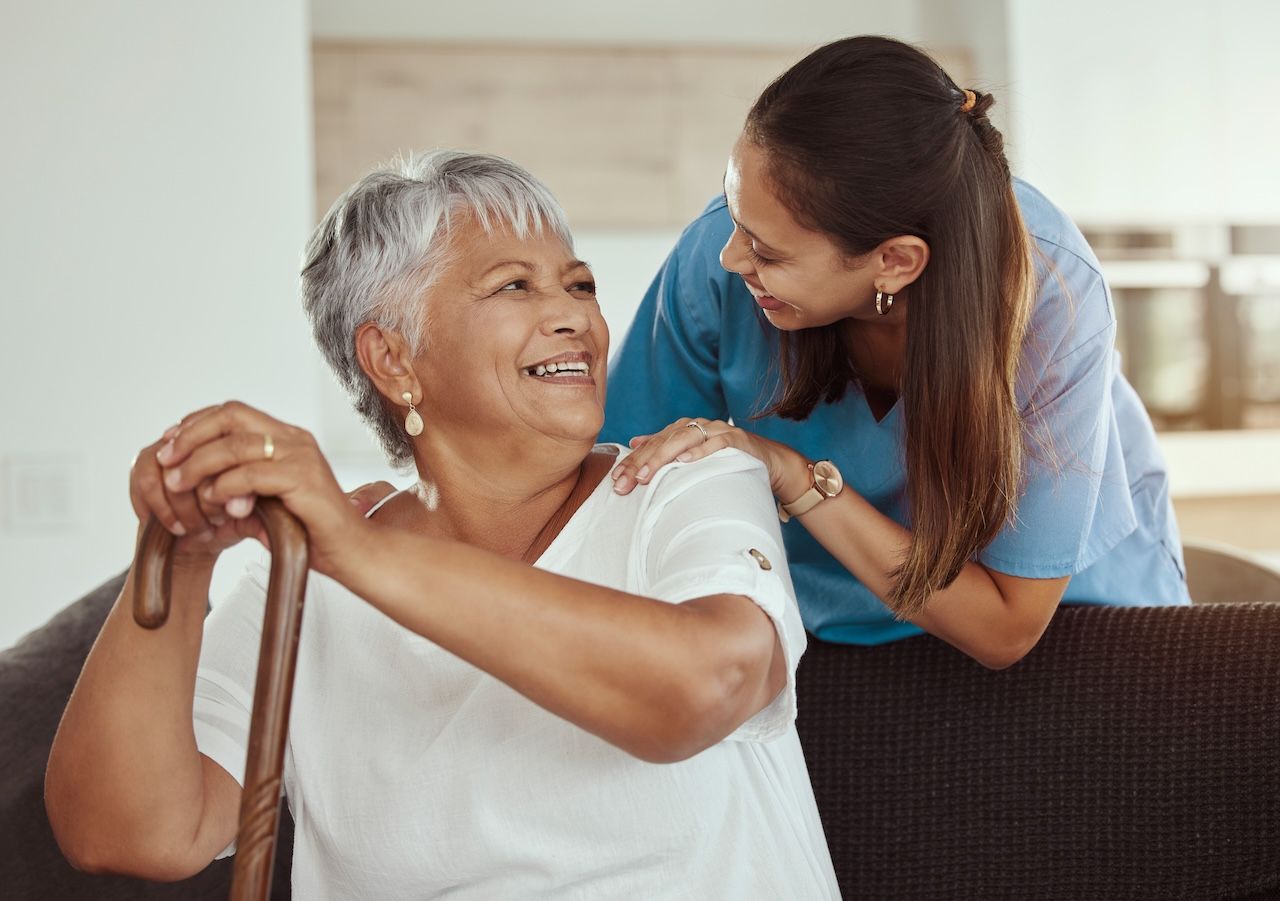
• Caregivers provide companionship and help with household tasks, meals, and other everyday needs.
• Certified nursing assistants can provide personal care, while registered nurses can administer medications and perform medical procedures.
• Your loved one’s current and future needs can help you decide which type of professional support is appropriate.
If you’re beginning to research care options for a loved one, you may come across several terms that might seem interchangeable but actually provide specific services and care. Caregivers, certified nursing assistants (CNAs), and registered nurses (RNs) each play an important role in a caregiving support system, but they provide different levels and types of support. Here’s what sets these three roles apart.
What is a caregiver?
Caregivers provide basic help and companionship. They may help an older adult with household chores, prepare and share meals, read aloud, play games, or write letters. Some caregivers can live with an older adult so someone is there to provide support 24/7. You may also be able to hire a companion through an outside agency for a loved one in an assisted living community if you feel they need more attention or friendly one-on-one time.
What is a certified nursing assistants (CNAs)
CNAs can do everything a caregiver can, along with providing personal care such as help with bathing, toileting, or moving safely from a wheelchair to a bed. CNAs can also oversee an older adult taking medication, though they cannot administer it themselves. They’re trained to provide more involved and potentially intimate care than caregivers. In hospitals, CNAs may help people use bedpans, turn over, or shave before surgery. In an assisted living community, they may help residents use the bathroom, manage incontinence, get out of bed in the morning, or remember to take medications on time. They’re also trained in safe ways to help people with disabilities move around, make sure older adults are eating well, and provide compassionate care each day.
What is a registered nurse (RNs)?
Registered nurses can specialize in different types of nursing and medical care, such as surgical assistance or labor and delivery. They can administer medications, including intravenously or by injection, provide wound care, and perform other medical procedures that CNAs and caregivers aren’t licensed or trained to provide. Some RNs make home visits or provide care in senior living communities, such as nursing homes.
Medicare may pay for skilled nursing care provided at home in limited circumstances, such as after surgery or during a person’s rehabilitation. Some communities have professionals in several roles on staff and can offer a mix of caregivers, CNAs, and RNs to provide different types of support and care to residents.
In general, the main difference between a registered nurse and a CNA is the degree of formal education required. Registered nurses hold nursing degrees and typically have a bachelor’s degree, while CNAs earn certifications.
Both nurses and CNAs can specialize in specific areas such as surgery, maternity care, or mental health. Nurses can administer medications, including intravenously or by injection, provide wound care, and perform other medical procedures that CNAs and caregivers aren’t licensed or trained to provide.
Choosing the right caregiving support
It’s important to remember that one in five adults are family caregivers to relatives who are aging or living with disabilities, and roughly 40% of care recipients live with their family caregiver. Even when family members are closely involved in caring for aging relatives, they may eventually need respite or ongoing support from professional caregivers. This may become especially important as an older adult’s health changes or caregiving becomes difficult to balance with work, childcare, and other daily responsibilities. When family caregivers reach their physical or emotional capacity, it may be time to explore outside help from paid caregivers.
Your loved one’s needs will help determine whether a caregiver or CNA is the right choice for their care. A home caregiver could support an older adult with dementia or Alzheimer’s, but not someone who also has medical conditions requiring daily medical tasks, such as changing an insulin pump infusion site or changing the dressing on a wound.
Most agencies conduct an intake by phone or in person to help you determine the most appropriate level of support. You may also consider speaking with a senior living advisor for help understanding what level of care your loved one needs and what type of care may be right for them.
Family members, professional caregivers, and CNAs can help older adults remain at home in familiar surroundings for a longer period of time. When family caregivers reach their physical or emotional capacity, it may be time to explore outside support from paid caregivers who can help meet an older adult’s changing needs.
As you explore senior care options, ask which types of caregivers and medical professionals they have on staff. The community director can explain whether its caregivers, CNAs, and RNs are capable of meeting your loved one’s needs.
Be sure to think about how those needs may change over time. Some communities are designed to support older adults as they age in place, while others may not be able to provide nursing care for people with significant medical needs.
Get peace of mind with a Care Plan
If you want guidance. A Care Plan, created by a licensed nurse, can help you take the next step with confidence.
Expert reviewed by


Angelica P. Herrera-Venson, DrPH, MPH
Angelica Herrera-Venson reviews content related to healthy aging and caregiving for Seniorly. With deep experience in public health policy and analysis, Dr. Herrera-Venson has focused much of her career in gerontology and public health. She has over 20 years of experie...
Written by

Marlena del Hierro
Marlena del Hierro is a strategic senior care industry leader with over a decade of experience. As Director of Operational Growth at CareScout, she drives growth and forges strategic partnerships, leveraging her MA in Gerontology from San Francisco State University. Pr...